
Late-Winter Resilience: How to Eat for Immune Strength Before Spring
“The body does not thrive on extremes. It thrives on steady, intelligent nourishment.”
By late February, the body is often running on reserves. Sun exposure has been minimal, vitamin D levels are typically at their lowest, and immune resilience can quietly decline. Add to that disrupted circadian rhythms, indoor air exposure, and cumulative stress—and it becomes clear why this is a vulnerable window.
Rather than jumping ahead to restrictive “spring cleanses,” this is the time to rebuild.
Immune competence depends on adequate protein, fat-soluble vitamins (A, D, E, and K), zinc, and a well-functioning gut barrier. Collagen-rich broths support mucosal integrity. Slow-cooked meats provide bioavailable iron and amino acids. Fermented vegetables contribute beneficial microbes that help regulate inflammatory responses. Even cooked leafy greens—often overlooked in winter—supply folate, magnesium, and polyphenols that support cellular repair.
Late winter is not the season for raw salads and juice fasts. The digestive system still benefits from warmth and ease. Stews, broths, root vegetables, herbs, and citrus create a bridge between the density of winter and the freshness of early spring. Adding parsley, thyme, rosemary, and lemon brightens meals while delivering antimicrobial and antioxidant compounds.
It is also wise to think ahead to spring allergies. A resilient gut lining and balanced immune response reduce overreaction when pollen rises. Nourishment now influences resilience later.
In traditional seasonal frameworks such as Traditional Chinese Medicine, the weeks before spring are considered a preparation phase—strengthening the body before growth accelerates. Modern physiology supports this logic. Immune readiness is not built overnight; it is cultivated consistently.
Instead of depletion, choose restoration. Instead of restriction, choose density. Let food be the slow, steady foundation that carries you into spring with strength rather than fragility.
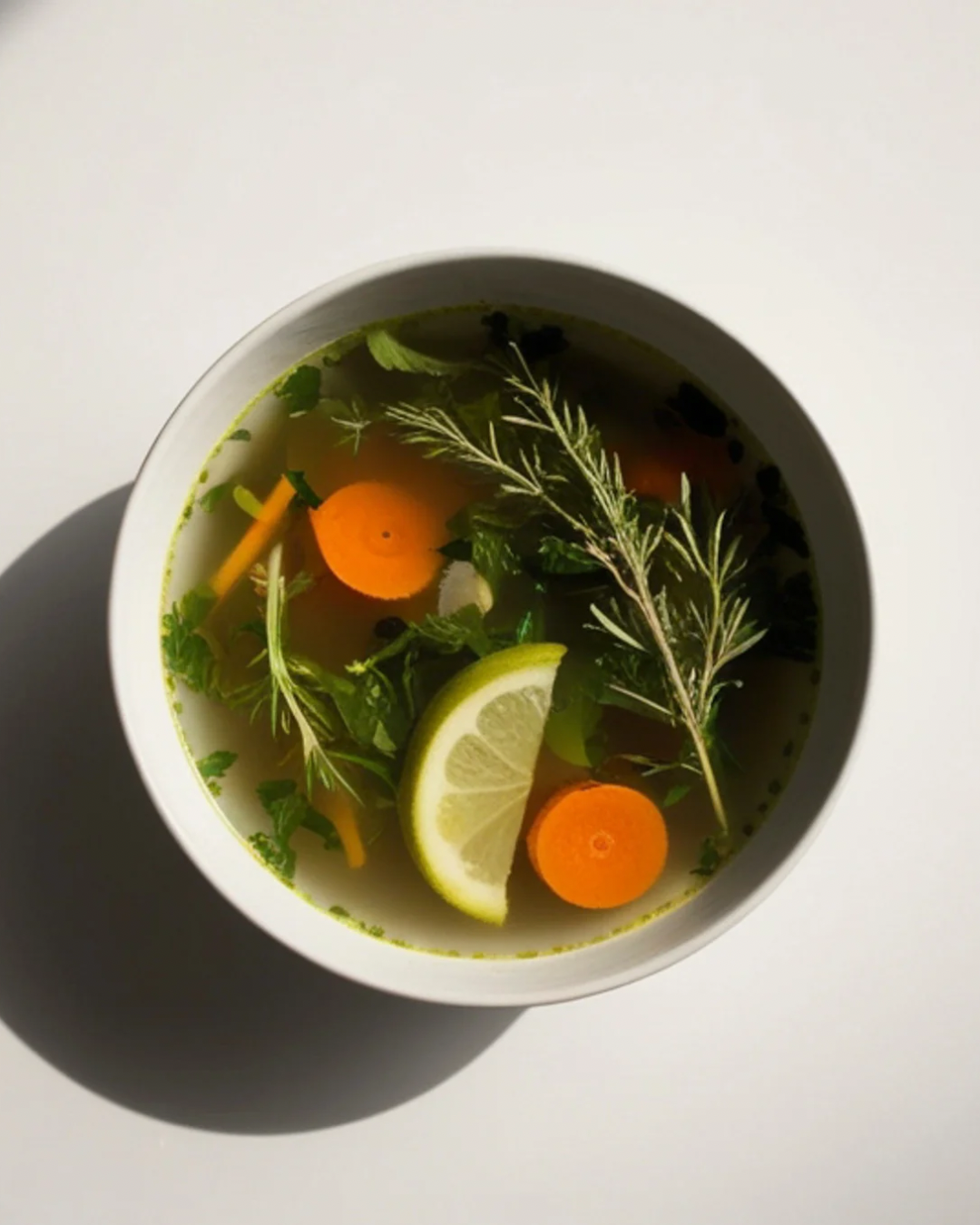
Mineral-Rich Chicken & Herb Broth (Late-Winter Immune Support)
This broth is designed to provide collagen, glycine, zinc, and fat-soluble vitamins while remaining light enough to bridge winter into early spring. The addition of fresh herbs and lemon enhances antioxidant capacity and supports digestion.
Why This Works
Collagen & glycine support gut barrier integrity.
Zinc & iron from dark meat enhance immune cell function.
Herbs + lemon contribute antimicrobial and polyphenol compounds.
Minerals extracted from bones help replenish late-winter depletion.
Ingredients
1 whole pasture-raised chicken (or 2–3 lbs bone-in thighs + carcass)
2 carrots, chopped
2 celery stalks, chopped
1 yellow onion, halved
3 cloves garlic, crushed
2 bay leaves
1 tablespoon apple cider vinegar
1 teaspoon whole black peppercorns
1 small bunch fresh parsley
2–3 sprigs fresh thyme
1 sprig fresh rosemary
1–2 teaspoons sea salt (adjust to taste)
Juice of ½–1 lemon (added at the end)
Filtered water to cover (about 3–4 liters)
Method
Place chicken, vegetables, bay leaves, peppercorns, and vinegar into a large stockpot. Cover fully with water.
Bring to a gentle boil, then immediately reduce to a low simmer. Skim any foam that rises.
Simmer uncovered or partially covered for 2–4 hours (longer if using a carcass only—up to 6 hours). Avoid aggressive boiling to preserve clarity and nutrient density.
During the last 15 minutes, add fresh parsley, thyme, and rosemary.
Remove chicken and strain broth through a fine mesh sieve.
Stir in sea salt and fresh lemon juice while warm.
Optional: Shred the cooked chicken and return some to the broth for a light meal.
Serve warm with a side of fermented vegetables for additional microbial support. This is not a detox broth—it is a rebuilding broth.