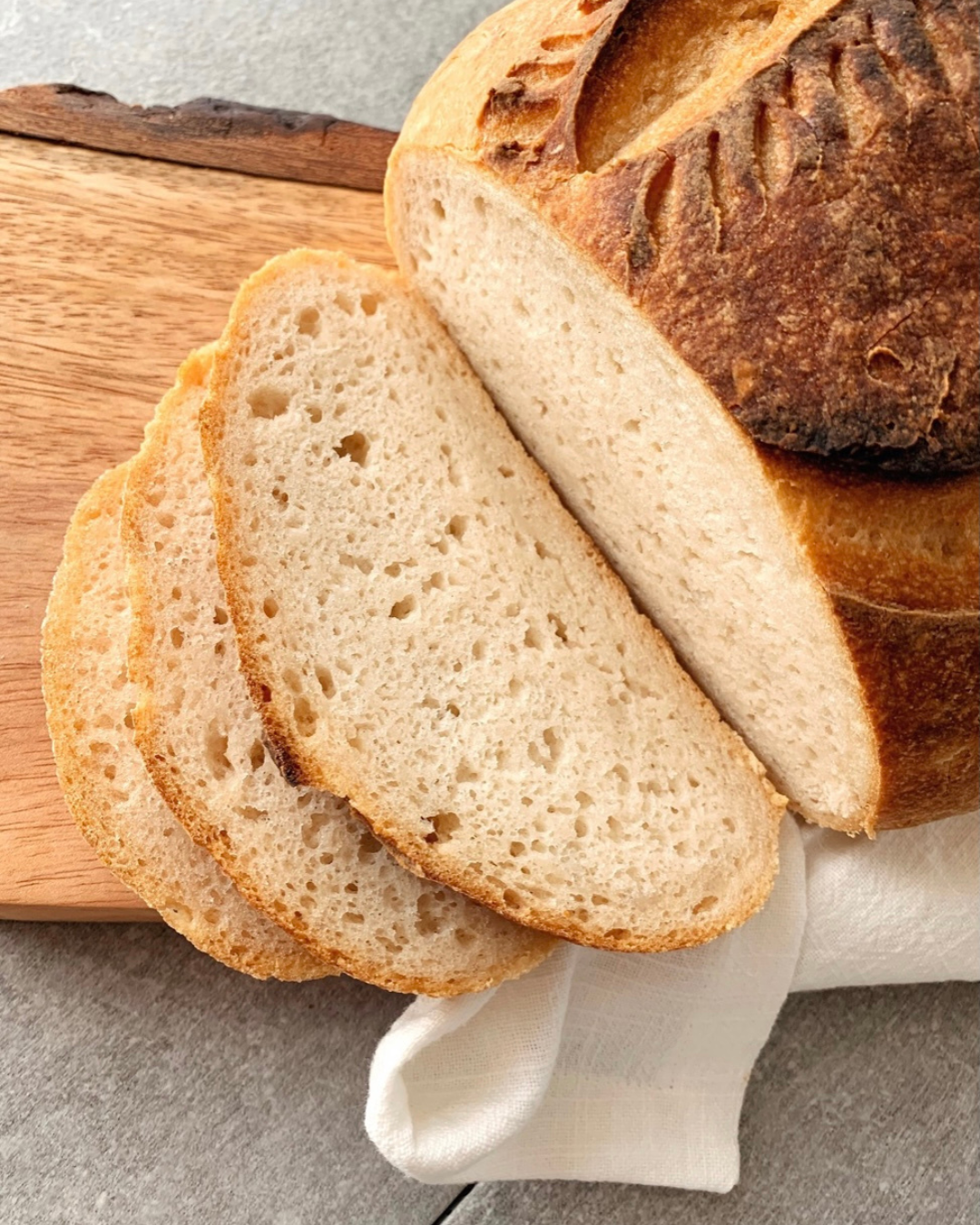
Sourdough vs. Regular Bread: Does It Actually Make a Difference?
Sourdough vs. Regular Bread: What’s the Real Difference?
Bread is often labeled as either “good” or “bad,” but that oversimplification misses what actually matters: how the bread is made. The difference between sourdough and conventional bread is not just taste or texture—it’s biochemistry. Fermentation changes the nutritional profile, digestibility, and metabolic impact of the final product in measurable ways.
Understanding these differences allows you to make more informed decisions about whether bread supports or disrupts your overall nutrition.
Fermentation: The Defining Factor
At Mountain Wellness Kitchen, our sourdough is made using a slow fermentation process driven by naturally occurring wild yeast and lactic acid bacteria—applied to a gluten-free flour system using Namaste Organic Gluten-Free Flour Blend.
Unlike conventional gluten-free bread, which typically relies on commercial yeast and rapid-rise methods, our sourdough fermentation extends from 12 to 48 hours.
This extended fermentation is not just traditional—it is functional. During this time, microorganisms begin breaking down complex carbohydrates present in gluten-free flours (primarily starches from rice, tapioca, and other grain or root sources). While there is no gluten to degrade, the fermentation still initiates partial pre-digestion of these starches and other compounds.
The result is a bread that is metabolically altered before it reaches your body—often easier to digest compared to standard gluten-free baked goods, which are typically produced within a few hours and remain largely untransformed.
Phytic Acid and Mineral Absorption
Even in gluten-free flour blends, phytic acid remains relevant. Ingredients such as brown rice flour can contain phytic acid, which binds to minerals like iron, zinc, and magnesium, reducing their bioavailability.
In conventional gluten-free bread, this compound remains mostly intact due to the rapid production process.
However, the acidic environment created during sourdough fermentation activates enzymes such as phytase, which help break down phytic acid over time—even within gluten-free systems.
The result is improved mineral accessibility. This does not make sourdough a nutritional outlier, but it does enhance the usability of the nutrients already present in the ingredients.
Glycemic Response and Blood Sugar Stability
This is where fermentation becomes particularly relevant for gluten-free bread.
Most conventional gluten-free breads are made with high-starch flours (such as rice and tapioca), which are rapidly digested and can lead to sharp spikes in blood glucose.
Sourdough fermentation modifies the structure of these starches, slowing their rate of digestion and glucose release. Evidence suggests that fermented breads can produce a lower glycemic response compared to their non-fermented counterparts.
This effect is further supported by organic acids produced during fermentation, which can slow gastric emptying and contribute to improved blood sugar regulation.
In practical terms, this means fewer rapid spikes and crashes—an important distinction for energy stability and appetite control.
Digestibility and Gut Impact
Because this is a gluten-free system, the benefit is not about gluten breakdown—it is about overall digestibility.
Fermentation reduces the burden on the digestive system by partially breaking down starches and other compounds that would otherwise require more effort to process.
Lactic acid bacteria also produce beneficial metabolites during fermentation, which may support gut function. However, this is not a probiotic food in the strict sense, as live bacteria do not survive baking.
The primary benefit remains improved tolerance and digestion—not the delivery of live microbes.
So, Does It Actually Make a Difference?
Yes—but context still matters.
Using a gluten-free flour blend does not automatically make bread metabolically supportive. Most gluten-free products on the market are still highly refined and rapidly absorbed.
What changes the equation is the fermentation process.
When gluten-free flours are properly fermented, the result is a product that is generally easier to digest, more nutritionally accessible, and less disruptive to blood sugar compared to standard gluten-free bread.
It is not a free pass—but it is a clear upgrade.
Learn the Process, Not Just the Recipe
If you want the benefits of gluten-free sourdough, the process matters as much as the ingredients.
Working with blends like Namaste Organic Gluten-Free Flour requires an understanding of hydration, fermentation behavior, and structure—this is not conventional wheat sourdough.
That’s exactly why we created our online sourdough tutorials at Mountain Wellness Kitchen. Instead of relying on trial and error, you’ll learn a repeatable system designed specifically for gluten-free fermentation. Head to mountainwellnesskitchen.com to view our video tutorial options, and to get your hands on Goldie, our famous gluten-free sourdough starter (sent to you dehydrated!)
Because when you understand the process, you’re not relying on labels—you’re producing something fundamentally different.