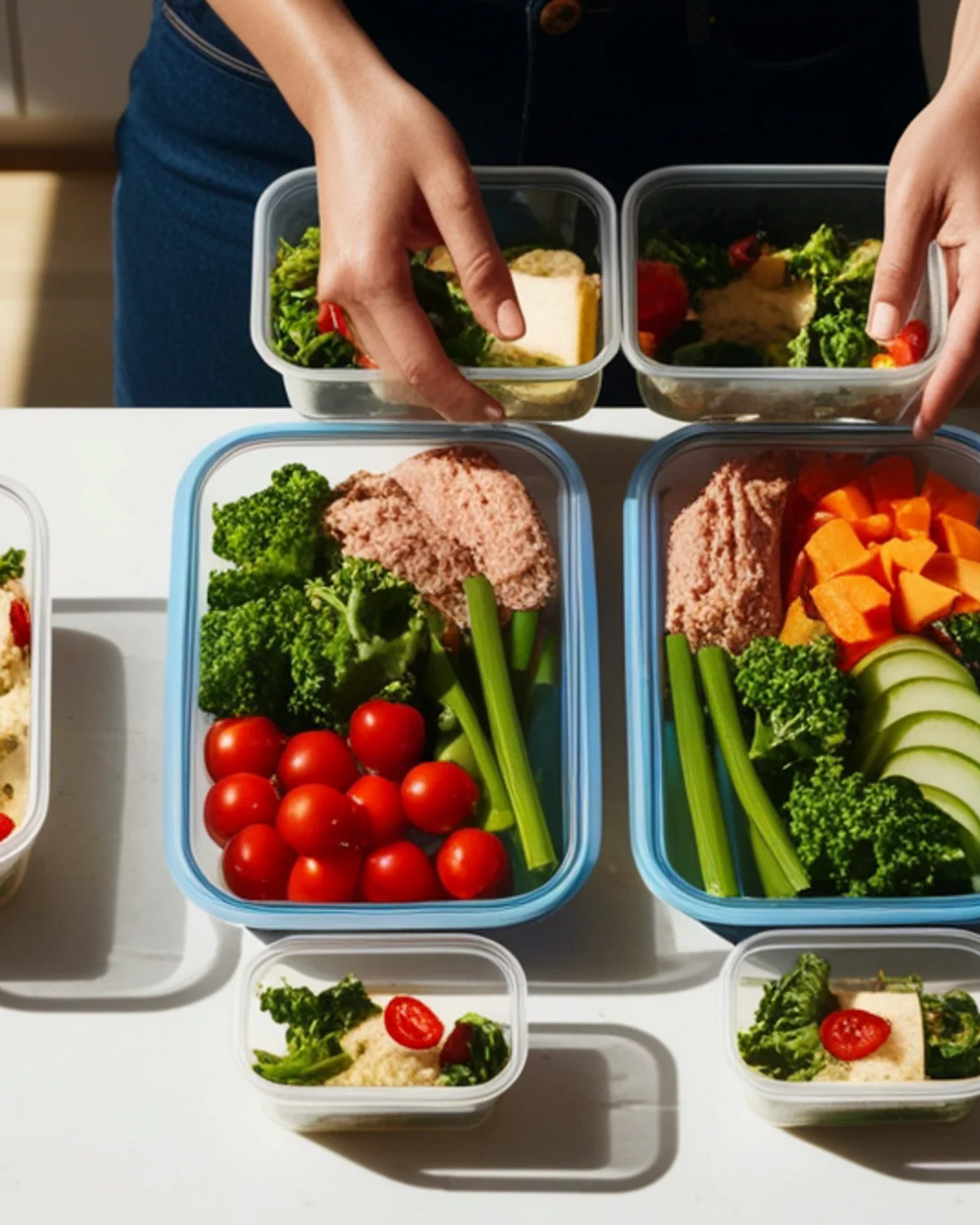
Meal Prep That Actually Works for Real Life
Systems, Not Perfection
Meal prep has been marketed as a highly aesthetic, perfectly portioned routine that assumes unlimited time, energy, and motivation. That model breaks down quickly in real life. What actually works is not discipline alone, but systems that reduce decision fatigue, stabilize energy, and make nutrient-dense food the default option instead of a daily negotiation.
The goal is not to “be on top of everything.” The goal is to create a structure where eating well requires less effort than falling back on convenience food.
“You don’t need more motivation—you need fewer decisions.”
Why Most Meal Prep Fails
Most people approach meal prep as an all-or-nothing task: a full day of cooking, a fridge full of identical meals, and the expectation that life will go according to plan. It rarely does.
The real issue is that this model ignores three biological realities: fluctuating energy levels, limited cognitive bandwidth, and the body’s need for variety and freshness. When meal prep becomes rigid, it creates friction, and friction leads to inconsistency.
A more effective approach is modular and adaptive. Instead of preparing complete meals, you prepare components that can be assembled quickly depending on appetite, schedule, and energy.
Build a System, Not a Schedule
A functional meal prep system is built on repeatable elements that simplify your week without locking you into a strict plan. This means focusing on core categories of food that support metabolic stability: protein, healthy fats, and fiber-rich carbohydrates.
Instead of asking, “What am I eating today?” you shift to, “What do I already have ready?”
A simple system might include:
A batch of protein (slow-cooked beef, roasted chicken, or boiled eggs)
A cooked carbohydrate source (potatoes, rice, or root vegetables)
Pre-washed or roasted vegetables
A nutrient-dense add-on (like a sauce, fermented food, or broth)
This structure allows you to assemble meals in minutes without sacrificing nutritional quality. It also reduces reliance on ultra-processed options when time is tight.
Focus on Energy, Not Just Convenience
Convenience food is engineered to be easy, but it often comes at the cost of stable energy. A well-designed meal prep system should support blood sugar regulation and sustained energy throughout the day.
This means prioritizing meals that include:
Adequate protein to support satiety and muscle function
Healthy fats for hormonal balance and slower digestion
Carbohydrates that replenish glycogen without causing sharp spikes
When meals are balanced, cravings decrease, and the need for constant snacking often resolves on its own. This is not about restriction—it is about physiological stability.
Reduce Friction Wherever Possible
The most effective systems are the ones you can maintain on low-energy days. That requires removing unnecessary complexity from your environment.
This might look like keeping your kitchen stocked with reliable staples, repeating a small number of meals each week, or preparing extra portions without labeling it as “meal prep.” The less you rely on willpower, the more consistent your nutrition becomes.
It is also worth recognizing that meal prep does not need to happen all at once. Cooking double portions at dinner or preparing one component per day can be just as effective as a dedicated prep session.
Consistency Over Perfection
Perfection is not only unrealistic, it is counterproductive. Missing a prep day or ordering food occasionally does not undo your progress. What matters is the overall pattern.
A system-based approach allows for flexibility without collapse. If one part of your routine breaks, the rest can still hold. This is what creates long-term sustainability.
Over time, these small, repeatable actions compound into a stable baseline of nutrition that supports energy, mood, and overall health.
The Takeaway
Meal prep that works in real life is not rigid, aesthetic, or time-consuming. It is practical, adaptable, and grounded in how your body actually functions.
When you shift from chasing perfection to building systems, you remove friction, stabilize energy, and make nourishing food a consistent part of your daily life—without needing to think about it constantly.
That is the real goal.