Your Child Isn’t “Picky”: How Modern Food Rewires Taste, Appetite, and Behavior
Your Child’s “Picky Eating” Isn’t Random
Most parents are told the same thing:
“They’ll grow out of it.”
“They’re just picky.”
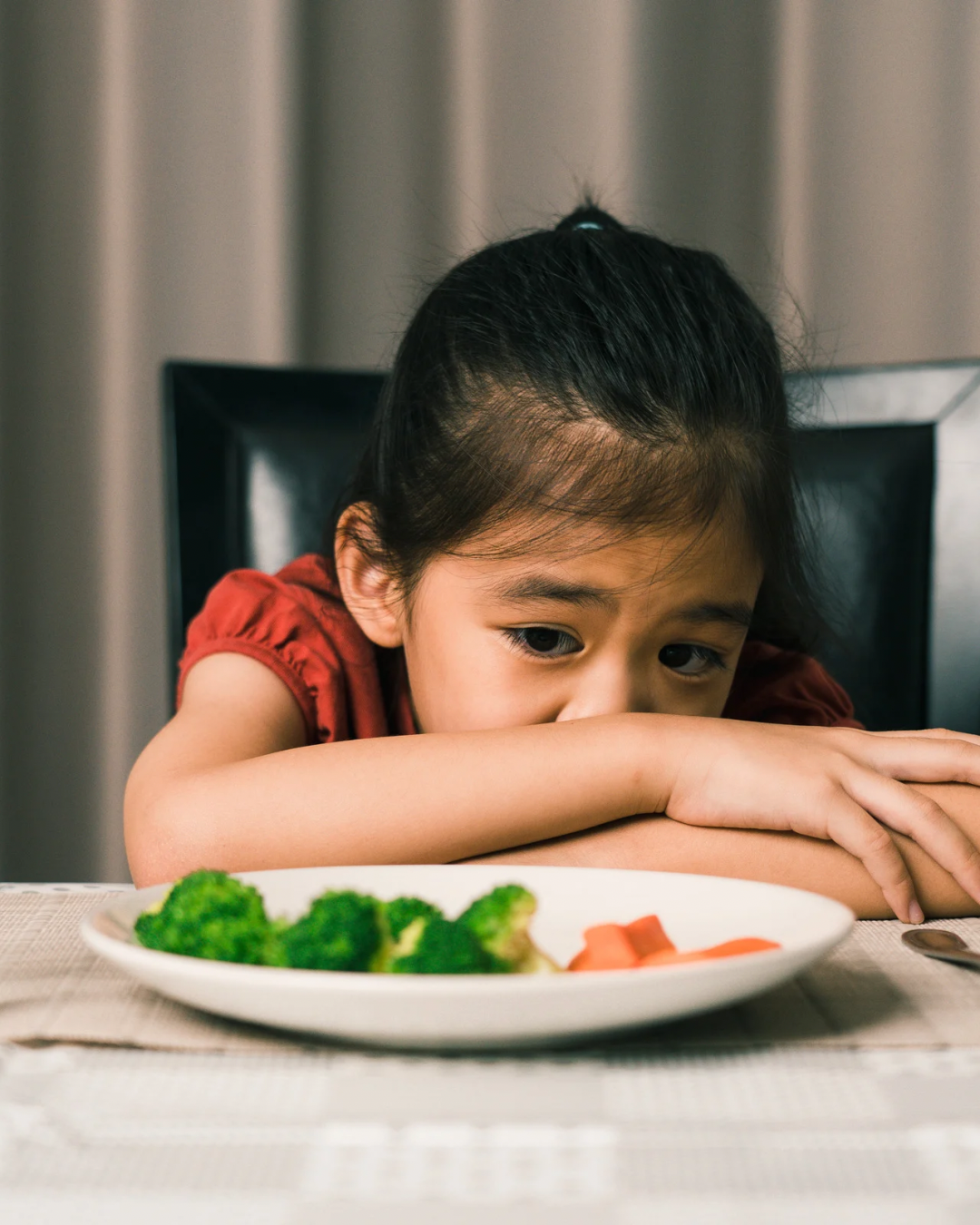
But that explanation is incomplete—and frankly, unhelpful. Picky eating is not just a personality trait. It is a learned, conditioned response shaped by early exposure, food texture, and neurobiology. What your child eats in the first years of life quite literally wires their brain for what they will accept—or reject—later.
“Children don’t reject food randomly. They reject what their brain has not been trained to recognize as safe, familiar, and rewarding.”
The Brain on Modern “Kid Food”
Today’s children are raised on foods engineered for convenience:
Pouches
Crackers
Bars
Sweetened yogurts
Ultra-soft, uniform textures
These foods share three characteristics:
Predictable taste (often sweet or bland)
Uniform texture (no variation)
High palatability (easy dopamine reward).
This matters because the brain is constantly learning. When a child repeatedly consumes hyper-palatable foods, their brain begins to prefer fast energy (simple carbohydrates), low-effort chewing and familiar flavors.
Whole foods—especially vegetables, meats, and complex textures—require more sensory processing. To a brain trained on convenience, they feel unfamiliar and even threatening. This is not defiance, it’s conditioning!
Texture: The Overlooked Problem
One of the biggest drivers of picky eating is texture monotony. Pouches and purees bypass critical stages of oral development:
Chewing strength
Tongue coordination
Sensory tolerance
If a child isn’t exposed early to varied textures—fibrous meat, soft vegetables, crunchy elements—their nervous system can become hypersensitive. This is why many children:
Gag on meat
Refuse mixed dishes
Prefer “dry” foods like crackers
Their system isn’t broken. It’s under-trained.
Flavor Training Happens Early
There is a window in early childhood where flavor exposure matters more than ever.Repeated exposure builds familiarity which builds acceptance.
But modern feeding patterns often limit this:
Same 5–10 “safe foods” on repeat
Sweet flavors dominating the palate
Minimal exposure to bitter, sour, or umami
The result? A narrow food acceptance range that becomes harder to expand with age.
Why Forcing Doesn’t Work
When parents recognize the issue, the instinct is often to push harder:
“Just take one bite.”
“You can’t leave the table until you eat.”
This approach backfires because pressure activates stress, and then stress shuts down their appetite. Instead of learning that food is safe, the child associates it with conflict. The goal is not force. The goal is exposure + safety.
How to Reset Without Creating Stress
You don’t need a complete overhaul overnight. You need consistency and strategy.
Start here:
1. Stabilize the environment
Regular meal times. No constant snacking. Hunger is a biological ally.
2. Anchor meals with real food
Protein + fat + fiber. This regulates blood sugar and reduces erratic appetite.
3. Reintroduce variety gradually
One new food alongside familiar ones. No pressure to eat—just exposure.
4. Change texture slowly
If your child only eats soft foods, begin adding slight variation:
Mashed → chunky
Soft → lightly firm
You can do these side by side, as we know first-hand how annoying it is when food is flat-out rejected. Put some chunky baked beans on their plates as well as the mashed… and in time without force, they will become curious and try it. Please have patience with this process.
5. Model behavior
Children learn by watching. If you don’t eat it, they won’t either. Sitting together and eating is the best way to eat. We know how tempting it is to crack on with jobs while they eat, as it’s a “window of time” — but it also isn’t helping the situation at hand.
Where Most Families Get Stuck
The biggest barrier is not knowledge—it’s logistics. Parents are busy. Meals default to what’s fast, accepted, and predictable. That’s exactly how the cycle continues.
If you’re trying to expand your child’s palate but don’t have the time to cook multiple balanced meals, this is where structured support matters. Mountain Wellness Kitchen meal prep is designed to bridge that gap:
Real, whole ingredients
Balanced macronutrients
Varied textures and flavors
No ultra-processed shortcuts
Instead of negotiating every meal, you create consistent exposure to properly prepared food—without the daily overwhelm.
The Long-Term Impact
Picky eating doesn’t just affect mealtime. It influences nutrient intake, gut health, energy levels, cognitive development and their relationship with food Children who remain in a limited food loop often carry those patterns into adulthood. But the reverse is also true: When you expand a child’s palate early, you set the foundation for resilience, adaptability, and metabolic health.
Some days, structure isn’t realistic. That’s where your environment matters. At the Mountain Wellness Kitchen wellness bar, the grab-and-go fridge gives you access to ready-to-eat, nutrient-dense meals, balanced snacks without hidden sugars, and real food options your child can learn to accept.
This isn’t about perfection. It’s about making the better choice… long-term gain. Your child is not difficult. They are responding exactly as their environment has trained them to. Change the inputs—slowly, consistently, intentionally—and their preferences will follow. Not overnight. But predictably.