
Putting Real Food Back at the Center: A Long-Overdue Reset in U.S. Nutrition Policy
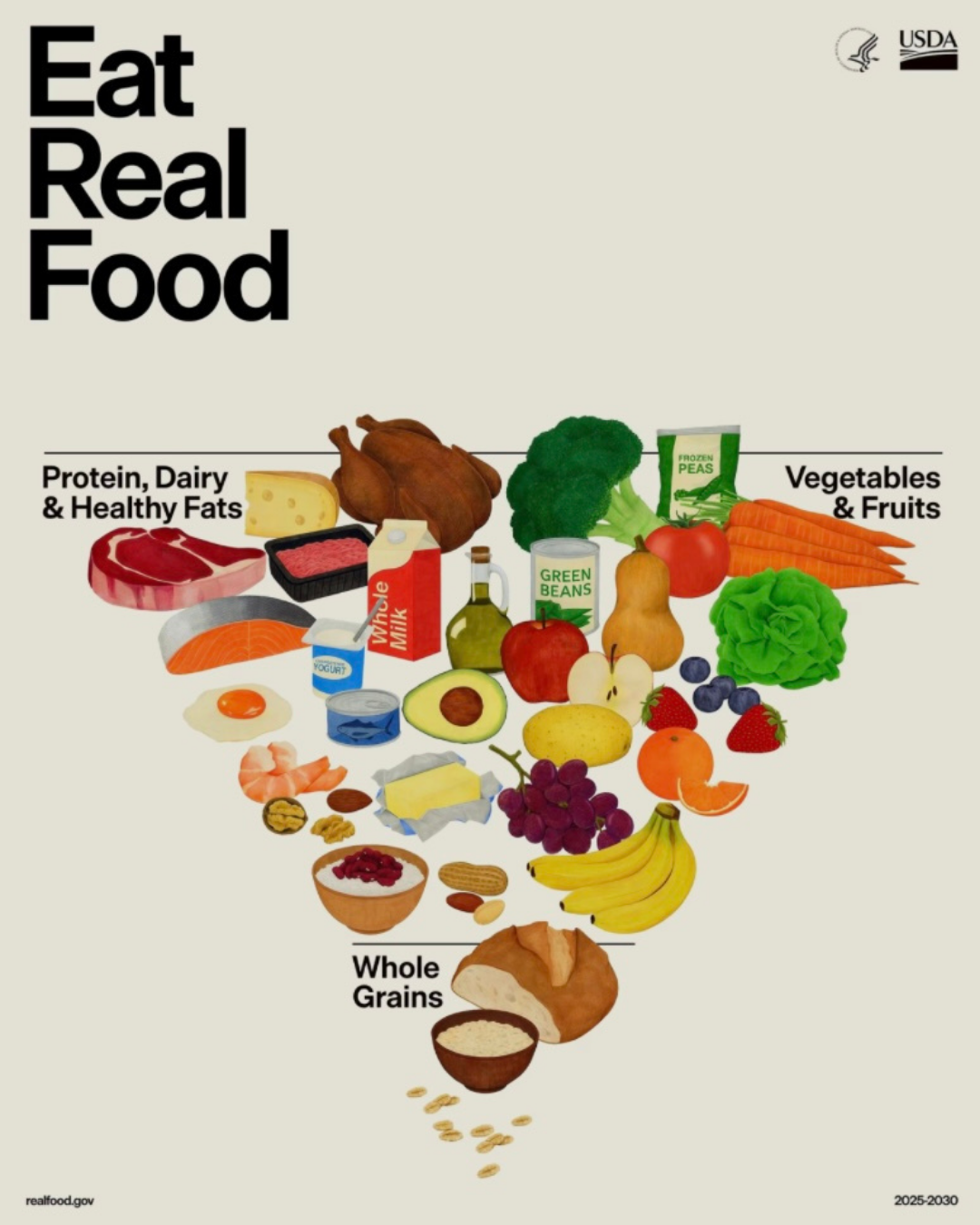
When guidelines focus on food quality instead of nutrient math, ultra-processed foods lose their place at the table.
⸻
The U.S. Department of Agriculture (USDA) and Department of Health and Human Services just released the Dietary Guidelines for Americans, 2025–2030, calling it the most significant reset of federal nutrition policy in decades — and for the first time, the message is simple: eat real food.
According to the press release, the guidelines are responding to a “national health emergency” driven by diet-related chronic disease. They stress that Americans need to prioritize whole, nutrient-dense foods — protein, dairy, vegetables, fruits, healthy fats, and whole grains — and dramatically reduce highly processed foods high in added sugars, refined carbs, and artificial additives.
This isn’t just flavor text. For years, federal guidance has leaned heavily on nutrient targets rather than food quality, which meant many packaged foods could technically fit the guidelines even while delivering little real nourishment. The new language flips that framing toward foods that come from nature and farms, not factories.
Here’s what’s now emphasized:
Protein at every meal from real sources like meats, eggs, seafood, and dairy.
Vegetables and fruits throughout the day, focusing on whole, unprocessed forms.
Healthy fats from whole foods (not refined industrial fats).
Reduction of refined carbs, added sugars, and highly processed foods.
For Mountain Wellness Kitchen readers, this shift feels familiar: nutritional guidance that values food as food rather than as engineered nutrient parts. While guidelines are still broad and apply to huge populations, this reset aligns more with real-food principles — and could influence everything from school meals to government food programs.
Recipe!
🥗 Whole-Foods Kid Lunchbox
This Whole-Foods Kid Lunchbox is designed to align with a balanced, nutrient-rich approach to eating that reflects both whole-food principles and the latest USDA guidelines. Each component focuses on minimally processed ingredients—fresh fruits and vegetables, wholesome proteins, and healthy fats—providing essential vitamins, minerals, and fiber without added sugars or refined grains. By combining protein-rich chicken, fiber-packed sweet potatoes, crisp veggie sticks, and seasonal fruit, this lunch supports sustained energy, healthy growth, and developing taste buds, all while keeping flavors simple and kid-friendly.
Chicken Bites
Cut 2 chicken thighs into small pieces
Cook in 1 tbsp olive oil or butter
Add a drizzle of honey + squeeze of lemon
Sprinkle a pinch of salt
Sweet Potato Coins
Slice 1 sweet potato into coins
Toss with olive oil + salt
Roast at 400°F / 200°C for 20 min
Veggie Sticks & Dip
Carrots + cucumber sticks
Dip: plain yogurt + drizzle of olive oil + pinch of salt
Fruit
Blueberries, apple slices, or a small mandarin
Tips:
Let food cool before packing
Use silicone cups to separate items
Keep flavors simple for picky eaters